
Running shoes are everything. They don’t have to be super expensive or fancy, but they’ve got to fit you correctly (How to Buy the Perfect Running Shoes). The right shoe prevents extra soreness and wards off injury.
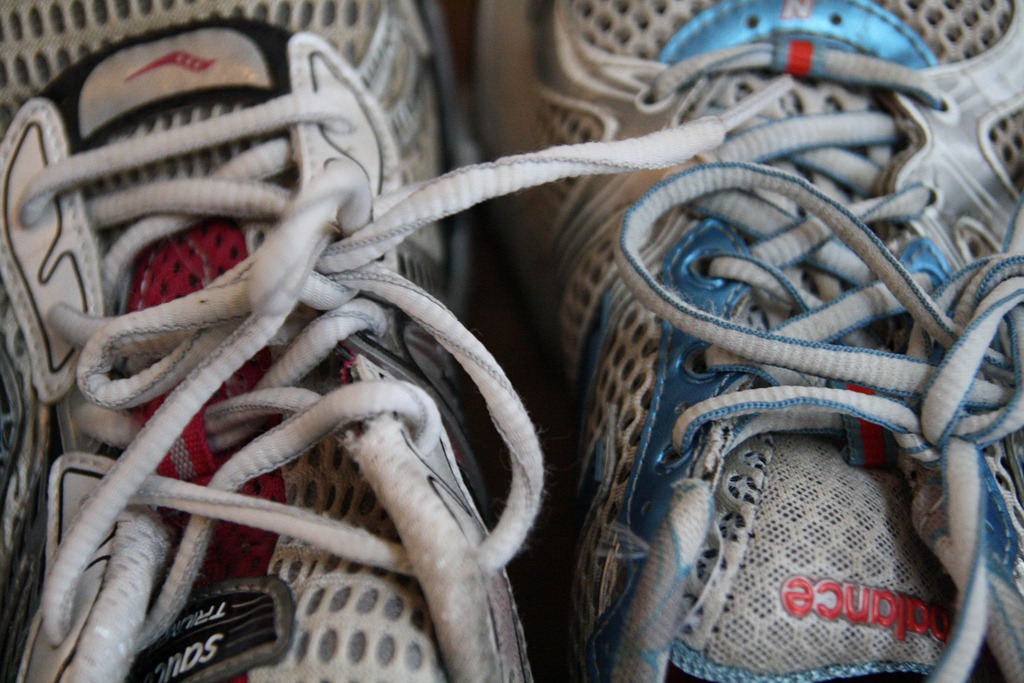
But even the perfect shoe has an expiration date. Over time, the cushioning and tread is broken down, rendering the shoes less effective. I used to think this was a little marketing ploy designed to convince you to buy new shoes – but it’s totally true! Running in ‘shot shoes’ increases stress and pressure on your joints, potentially causing injuries in your ankles, knees, legs, hips… even your back!
So, when do you need to replace running shoes?
Have you heard the recommendation to replace them every XX number of miles? I’ve seen a variety of numbers, ranging from 300 – 600. The recommendations vary so much that I’m suspicious of the mile method. I’ve also heard people cite the six month mark, but I’ve always been wary of just going by the calendar. What if I only run 10 miles a week? Or what if I run 30 miles a week?! Big difference.
Another recommendation is to check the tread. If the tread is wearing away, it’s definitely time to replace the shoes. But I feel like this is too late! If my tread is gone, the cushion is probably long since disappeared.
At what point your shoes go kaput strongly depends on your particular style of running. A smaller runner who mostly works out on soft trails, for example, won’t blow through their shoes as quickly as a heavier runner who normally runs on concrete. Plus – some of us are ‘harder’ runners and others are lighter on their feet (I, for one, am one of those people who stomp all over my house, so I’m probably a heavy runner, too).
I know it’s time to replace my shoes when my body says so. My feet start to hurt first, and then my knees start to protest. When my lower back starts to complain after workouts, it is SO time to purchase new shoes. Truthfully, this is probably ‘too late’ as I’m skirting dangerous injury territory if my body is already aching!
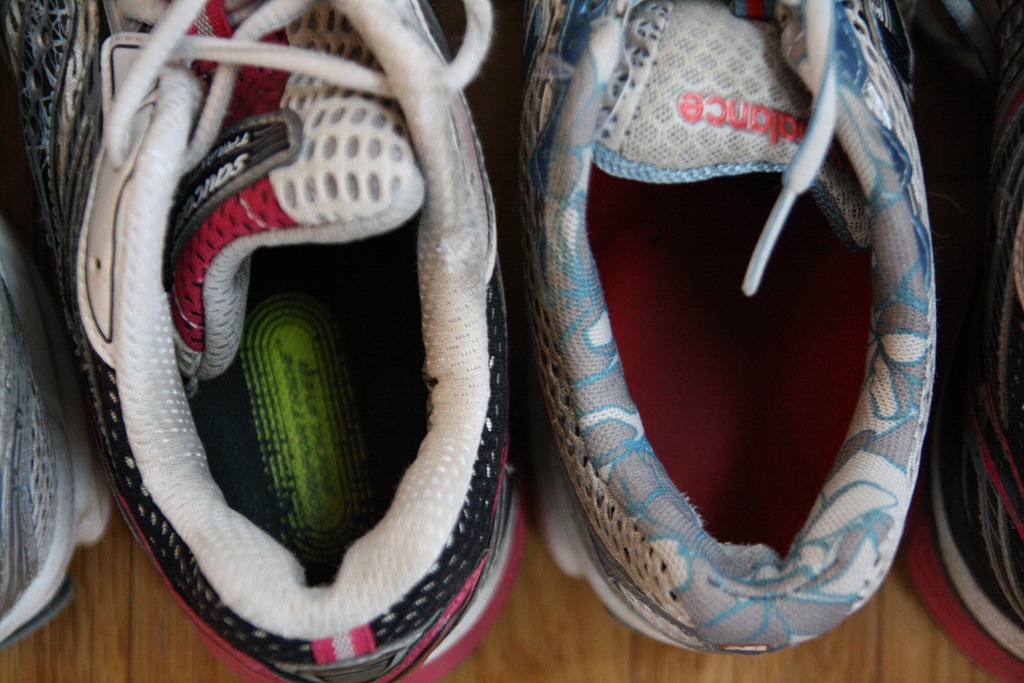
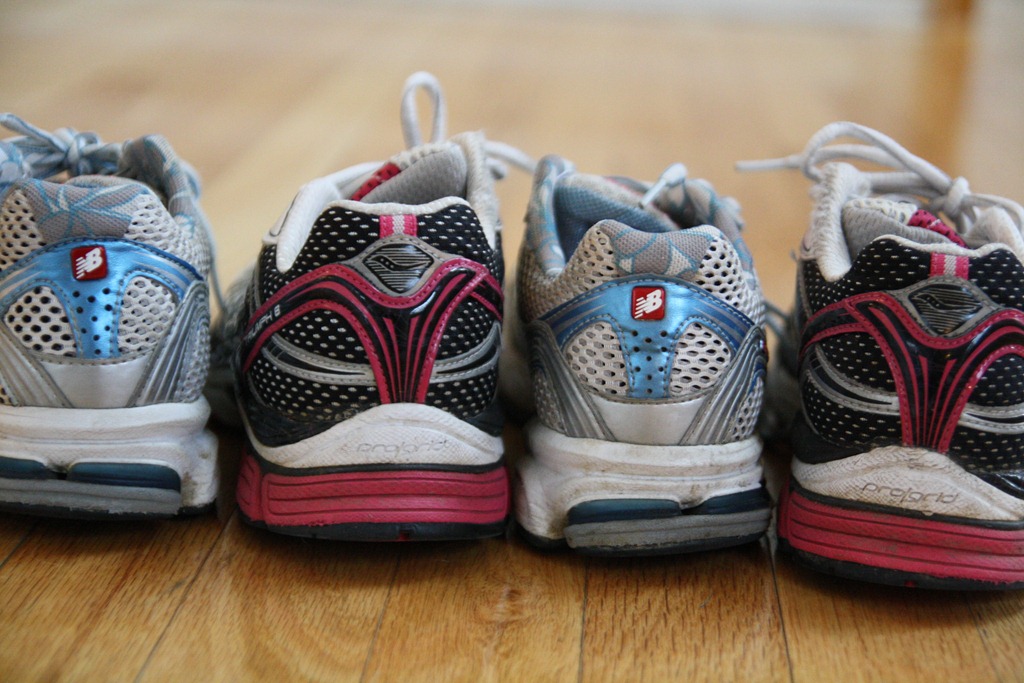
I always keep two shoes in my closet and tend to switch back and forth between the paris. I started doing this two years ago, and I really like it. I feel like it gives me an extra layer of protection against injury because my foot is cushioned in a slightly different way and I’m striking the ground in a different pattern with every workout.
When do you replace your shoes? Do you rotate shoes?


Twitter
Operation Beautiful
Pinterest
Facebook
{ 45 comments… read them below or add one }
Great post! I’ve tried to follow the mileage method but that requires me to write down and track the mileage of my shoes….that lasts all of about 2 weeks. Maybe. I too go by how my body feels. When it’s time to replace my shoes my knees and my hips start to get a little achy. It’s my sure sign, I better replace those babies FAST!
I have to replace my shoes around 250 miles. I’m pretty injury-prone and I start to get shin splint pain and this recurrent tendinitis. Buying shoes that often adds up quickly, but I’d rather buy shoes more often than end up injured!
I switch shoes as soon as shin splints start. I also try to rotate diff sneaks. I think it really helps the shoes and my body last longer.
I usually wait until my running shoes have holes in them and the tread is completely gone.
. . . maybe I’m waiting too long. ;-P
I have two pairs I rotate between also. They were both pretty pricey, so hopefully this strategy will keep me in decent shoes for a while! I used to think it wasn’t worth it to spend on running shoes, but that was after I got an IT band injury running a half-marathon in crappy shoes that put me out of commission for a while.
When I ran more & trained for races I would replaces them after about 400-500km give or take. But my tell tale sign is achy knees, as soon as that happens after a few runs I know it is time to get new shoes. I rotate between two pairs, a more minimalist shoe for shorter runs and a pair with more support for longer runs.
Great tips for shoe care! Having a pair of shoes with proper cushioning is so important, unless you’re into that really minimalist thing. I rotate two main pairs of running shoes, a pair of waterproof shoes for rainy/mucky runs, and I also have a pair of more minimalist shoes for shorter races. I also replace mine when I start having pains in my knees, generally around 350 miles or so. Once they get past 300 miles I only use them for shorter runs and start breaking in new shoes.
I need some new shoes, but I haven’t been doing much running so I’m considering some cross trainers! I don’t even know where to start there… need to do some research!
A running shoe is generally built better than a cross trainer, but they’re not as helpful for lateral movement since we generally run in a forward motion. You could go with a minimalist shoe or zero drop shoe! That will decrease the heal to toe angle and give you a solid platform to do other activities while still wearing a run shoe. Hopefully that helps a little with you decision! Brooks Pure Project line, Altra and New Balance all make several options.
Getting new running sneakers has been on my to-do list for the past two weeks! Even though I have a rough idea of my weekly mileage, my running workouts are time-structured, so I tend to go by the TK month rule.
I also do the two shoes rotating approach! Best idea ever!!
I’m really bad at this….my last pair I wore FAR beyond their expiration date….aaand now I can’t remember when exactly I bought my current pair. Yikes.
I agree with all of this! I tend to go through my shoes faster in the summer when I’m running outside, but all my running lately has been on the treadmill so the soles wear out much more slowly. I’ll also rotate shoes, but mainly for outfit-matching purposes!
Regardless of what colour though, they’re always Asics!
I’ve heard that you should get a new pair every 6 months or so but I tend to listen to my body. My ankle just started hurting this week and I believe it is due to the worn out arch support in my current shoes. Looks like I need to go shopping…oh, darn ; )
The big range in the mile recommendation is because of exactly what you mentioned: different runners are going to put a different amount of wear on their shoes. Lighter runners can go for the high end of the range while heavier runners probably need to replace their shoes more often. I’ve always seen 300-500 miles with that explanation, so I’m not sure what’s so confusing about this.
I tend to think about mileage, and start to pay some attention around 300-500 miles. However, a tell tale sign is how my body feels- achy knees, hips, and rolling my ankles. Recently, I’ve enjoyed using inserts to replace the stock inserts in my shoes- it adds a great level of cushioning! I’ve been known to put holes in my shoes, but until they stop feeling good, I don’t let it bother me.
If I remember right, my dad has several different pairs of shoes–which pair he wears depends on what surface he’s running on or something like that. I wish I could remember how often he buys new shoes, but I feel like it’s every few months. It probably depends on how many miles he runs in several months. He has lots of running shoes in his closet, many of which are brightly colored. And they’re not cheap.
I know that I don’t do any running but I tend to need new shoes usually after a year, sometimes two. Not sure if that’s good or bad. Haha.
I have my running shoes for “real” workouts, and then I have a pair of older running shoes for errands/activities. I could NEVER be on top of my game enough to track mileage on a pair of shoes. The pair I’m currently using were bought last spring right before half marathon training. I’m about to start full marathon training and plan on buying new shoes in April (when most of the snow should be gone).
You’re correct, the midsole will wear out before the tread goes! There is also the theory that your shoes have a shelf life (based on environmental factors), after 6mo regardless of miles they should be switched out for new kicks. They actually say the same for sports bras,but I can’t tell you how old some of my bras are. For the most part I go by feel, similar to you, but I also have a good idea as to when I started running in my shoes. I usually get 2-4mo depending on my mileage. Another idea (to make them last longer) is to have a pair of shoes specifically for running and another for weight lifting, classes at the gym and walking the pups. I do not do anything beyond running in my run shoes and I wear worn out shoes for everything else.
I’ve had the same pair of VFF Bikilas for years now. I mostly run without shoes, though, so replacing them isnt something I ever have to think about!
I also alternate between two pairs of running shoes, plus one older pair for crosstraining! This keeps my sneaks feeling springy. I generally change my shoes every 500 miles, as I am a smaller runner and a lighter runner, and thats usually when my knees start to get achy. I love hearing what other people do!
Thank you for the reminder, I actually need new shoes and keep forgetting until I’m actually out running (not the best time to remember)
Rotating is a great idea!
I have so many pairs of sneakers! I keep my retired sneakers for mud runs, I have CrossFit specific sneakers and my running shoes. I track my mileage with the Nike+ app and I usually retire my sneakers after 400 miles or so.
I buy new shoes when my feet and shins start to hurt while running and in a ‘this isn’t normal” way. Typically for me that’s about 350 miles or so.
The same hold true for insoles. I used to think that an expensive insole would last forever, but they need to be replaced as often as the shoes you run in. I find Super Feet insoles work the best at their price point.
two years ago I tried to start running. Lasted about 3 months. I was wearing these pink running sneakers.
Last year I decided to try again. I started off strong, and then kept going! Having never really done any races I completed 4 5ks!! EEEP! I bought new running shoes for this purpose.
I still had my old ones kicking around, I figured I’d keep them since I didn’t use them much – and I wore them the other day because my other pair was in the gym bag in the car….
It was a terrible experience. The shoe makes a huge difference!
I use the “if it hurts now, blame the shoes and replace them” theory. I used to track my miles by keeping the shoes in the box and writing the date and mileage of each run on the box, then do a running total so I’d know when they needed to be replaced. but then I got lazy.
Lately I have been buying new shoes about every 6 months but I wasn’t running a lot. I am training for a half marathon now and just bought new shoes so I will probably check again in about 3-4 months and see how worn the tread is.
Love the new banner on top!
I usually do the same, just wait until I start to “feel” the negative impact on my feet, then get new shoes. So here’s my question–what do you do with your old shoes? I usually keep a few (3-4) pairs around for walking, outdoor stuff (yard work, etc) and a pair or two extra, but do you just trash them after? I feel so wasteful doing this, yet if I tried to donate them would I just be “hurting” someone else’s feet (since the tread is worn, cushion gone)? Or would non profits (specifically those catering to homeless/in-need) take them? Anyone have any suggestions?
I keep my old ones for walking/yard work or I wear them for the occasional crappy mud/rain run when I don’t want to get my newer ones dirty. Also, I live in NC so I keep one old pair at my parents house in NY so I don’t have to worry about bringing run shoes when I go to visit!
When do I replace my shoes? Tomorrow! I have a Groupon that’s been sitting around and it’s about to expire so I HAVE to go this weekend.
i don’t rotate pairs, but i keep the 500 miles/6 months in mind as a general rule, and go my how my legs/feet feel. i never go OVER 6 months, and go under when my legs tell me to.
i’m injury prone, so i tend to need shoes more often than most people.
This is totally off topic, but have you seen this? I just saw an ad for it, and apparently they donate to GOTR! How awesome! https://twitter.com/MeanStinks
I love Mean Stinks!
I’m pretty light on my feet but I’m a mid foot striker and have high arches. When it feels like the arch support is gone (and my feet hurt) I replace them. I get a kick out of my wear pattern: the heel isn’t too worn but the middle is gone.
Im really bad about this– I tend to wear the same ones a lot and now they are getting pretty worn, but I love them, so its hard for me to go to another pair!
So funny that you posted this! I just did a post about my sneakers because I try so so hard to make them last. I know immediately when they are starting to wear and I call it the feeling of simply, “not right”. I am a lightweight runner yet it seems my shoes barely get to the 300 mile mark. I had a plan with my last pair – I wrote the date down that I started wearing them and only wore them to run, not all for any type of cross training or to walk around. And of course all of a sudden, I felt the “not right” feeling this week. Several miles short of 300. Exactly where I start to feel the loss of cushioning under the toes I do see the treads are worn. But it can’t be the end of the shoe, it’s not fair! It isn’t a full 3 months or a full 300 miles. Ugh!
I’m terrible at replacing my running shoes often enough. The past four years I have used my birthday money to get a new pair. Ideally I probably should replace them every 6 months (which would probably average about 400 miles) but I never get around to it. I’m so bad!
I go by feel mostly, and looking at the bottom. I’m pretty over-cautious though and I get new shoes about 3 times a year.
I have a pair of Brooks Pure Flows (love them!) for road running and a pair of Salomon trail shoes for my weekly trail runs. I try to run once a week on a soft trail to help my joints/avoid injury. I know it’s time to replace them when my knees start to hurt!
Good call to switch back and forth with the sneakers. My orthopedist said the cushioning in sneakers in meant to “bounce back” after 24 hours max so good idea to rotate shoes.
The mileage method was pretty dependable for me. Once I hit 350 miles I’d start feeling it in my knees and back. If I tried to stretch it to 375, my body would start screaming at me.
Alternating shoes the way you are is a great way to get more life out of your shoes. Shoes need time to “recover” from all the pounding, allowing the foam time to bounce back. If you run in the same pair every day (or every time), the foam doesn’t have as much of an opportunity to bounce back and it’ll break down faster.
I’ve never been a fan of the mileage method either–some people say 250, while others say 500! That’s a wide range!
I like your idea of alternating shoes…plus that gives me an excuse to buy another pair of pretty running shoes
I got a stress fracture when i ran in old sneakers! be careful everyone.
{ 1 trackback }